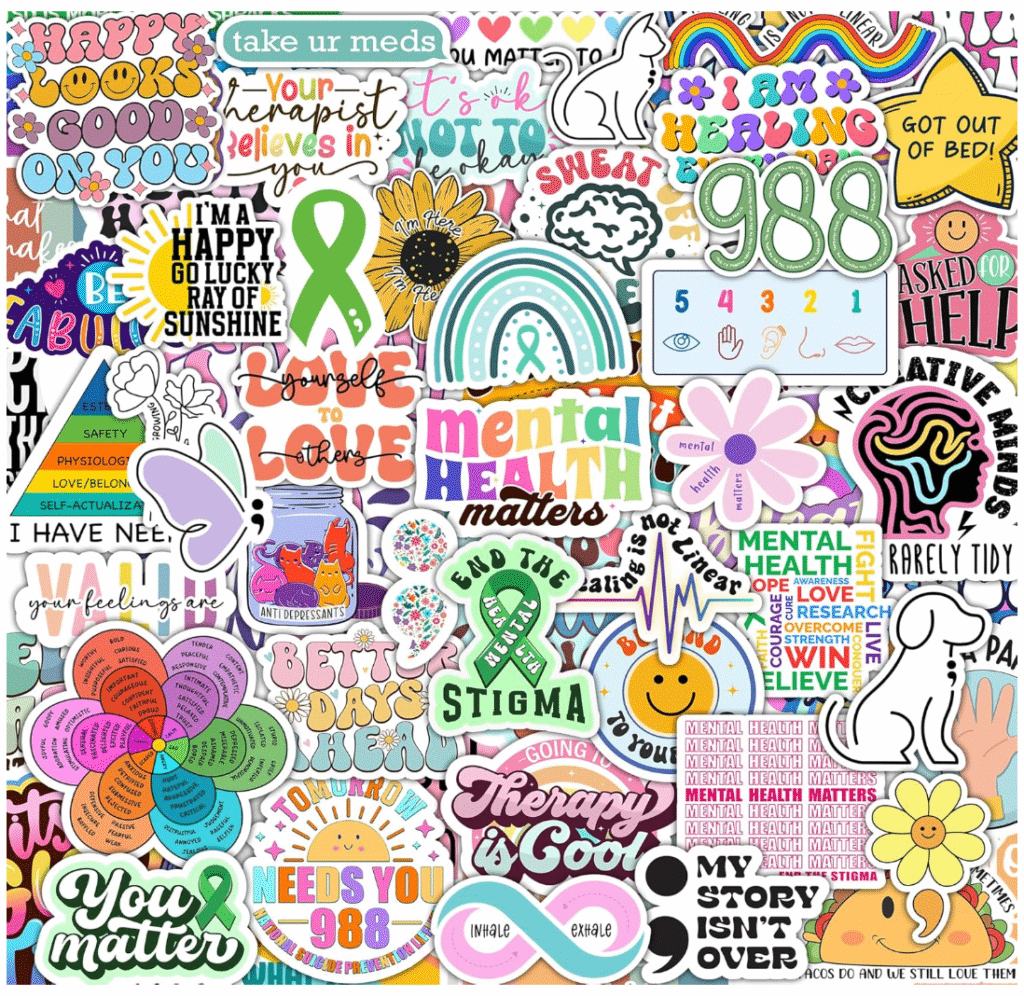
Understanding Mental Health Awareness Stickers
Mental health awareness stickers are visual tools designed to promote understanding, acceptance, and discussions surrounding mental health issues. These stickers come in various designs, colors, and messages, each tailored to resonate with different audiences. The primary purpose of these stickers is to raise awareness about mental health, challenge stigmas, and create a supportive environment for individuals who may be struggling with mental health challenges.
Common designs incorporate positive affirmations, informative statements, and symbols representing mental health themes. Phrases such as “It’s okay not to be okay” or “Mental health matters” serve not only as reminders of the importance of mental well-being but also as conversation starters. Individuals using or displaying these stickers can feel empowered to share their experiences or encourage others to discuss mental health openly. This conversation can lead to a greater understanding of mental health issues, fostering a community of empathy and support.
The significance of visuals in promoting mental health awareness cannot be overstated. Stickers often serve as eye-catching reminders that provoke thought and introspection. They hold the potential to spark dialogue in casual environments, such as schools, workplaces, or community spaces. By merging creativity with serious subject matter, mental health awareness stickers engage individuals in a way that written materials may not always achieve. Furthermore, the act of personalizing one’s space with these stickers allows individuals to express their values and experiences related to mental health, reinforcing the normality of discussing such topics.
In effect, mental health awareness stickers are more than mere decorative items; they are tools for self-expression and advocacy. Their presence can foster an atmosphere of acceptance and support, ultimately aiding those navigating their mental health journeys. By facilitating conversations and promoting understanding, these stickers contribute positively to the broader mental health discourse.
The Benefits of Distributing Stickers in Therapy
In recent years, the use of mental health awareness stickers has gained traction as a valuable tool in therapy settings. These stickers not only serve as decorative items but also play a significant role in enhancing the therapeutic experience for both therapists and clients. One of the primary benefits is the increased engagement they foster during sessions. Clients often find visual aids, such as stickers, more appealing, allowing therapists to create a more interactive and dynamic environment. This can especially benefit younger clients or those who may struggle to articulate their thoughts and feelings.
Furthermore, mental health awareness stickers can convey messages of hope and support, offering tangible reminders of positive coping strategies and self-care practices. When therapists incorporate stickers that emphasize themes like resilience, empathy, and understanding, they provide clients with a visual representation of their journey towards better mental health. This can significantly boost clients’ morale, reinforcing the idea that they are not alone in their struggles.
These stickers encourage open discussions about mental health, allowing clients to express their feelings and experiences more comfortably. Clients may relate to the imagery or messages, leading to deeper conversations about their own challenges and triumphs. By normalizing the use of these stickers within therapy, practitioners can effectively help to break the stigma surrounding mental health. Clients begin to associate these symbols with acceptance and healing, promoting a culture where mental health topics can be discussed without fear or shame.
Overall, the distribution of mental health awareness stickers in therapy enables a more engaging, supportive, and open atmosphere, contributing positively to the overall therapeutic process.
Creative Ways to Use Stickers in Therapeutic Settings
The incorporation of mental health awareness stickers into therapeutic practices can provide a unique and engaging way to facilitate discussions and reflections during sessions. One innovative strategy is to dedicate specific sessions to exploring stickers, where clients can choose stickers that resonate with their emotions or experiences. This activity can serve as an effective icebreaker, enabling clients to express themselves in a more relaxed environment. By allowing clients to select stickers that reflect their current mental state or past experiences, therapists can gain insight into their feelings and thoughts, fostering deeper conversations.
Another strategy is to integrate stickers into various therapeutic activities. For instance, during art therapy sessions, clients can use stickers as part of their creative processes, adding layers of meaning to their artwork. Stickers can also be incorporated into narrative therapy, where clients create stories that include specific stickers, thereby allowing them to visualize their feelings and experiences in a new light. This method not only enhances engagement but also empowers clients to take ownership of their healing journeys.
Moreover, stickers can serve as valuable takeaway materials for clients. Providing clients with a selection of mental health stickers at the end of each session can reinforce strategies discussed during therapy. These stickers could act as a reminder of coping techniques or affirmations that promote mental well-being. Clients can place these stickers in their personal spaces as motivational prompts, helping them maintain a connection to their therapeutic journey. Personalization is key; allowing clients to choose stickers that resonate with them can enhance their emotional investment in the therapeutic process. Overall, these creative applications of stickers in therapy promote engagement and self-expression, making them a powerful tool for both therapists and clients.
Promoting Mental Health Awareness through Stickers
The distribution of mental health awareness stickers serves as a powerful tool to foster a culture of mental health advocacy within communities. By employing these visually engaging symbols, therapists can initiate important conversations surrounding mental health and provide a means for individuals to express their experiences and concerns. Through carefully designed stickers, practitioners can effectively raise awareness about mental health issues, encouraging openness and reducing stigma.
Therapists can collaborate with various organizations, including schools, community centers, and local businesses, to disseminate these stickers. By partnering with educational institutions, they can create an environment where students feel comfortable discussing their mental health. For example, a mental health initiative could involve distributing stickers during workshops or events focused on wellness. This connection fosters a supportive atmosphere that normalizes the conversation around mental health challenges among youth, thereby instilling a lifelong understanding of the importance of mental well-being.
Social media platforms offer an additional avenue for disseminating mental health awareness stickers. By leveraging platforms such as Instagram, Twitter, and Facebook, therapists can reach a wider audience, sharing images of stickers alongside impactful messaging. Utilizing hashtags relevant to mental health advocacy further amplifies the reach of these campaigns. Encouraging clients and community members to post pictures of their stickers can generate organic discussions, creating a sense of camaraderie among those advocating for mental health awareness. Over time, this grassroots approach not only increases visibility but also sustains ongoing conversations about mental health and support.
In addition to stimulating dialogue, mental health awareness stickers have the potential to create supportive environments. By incorporating these stickers into daily life, individuals can visually signify their commitment to mental health advocacy, making it easier for those experiencing challenges to find allies and resources. By promoting discussions about mental health in various settings, stickers symbolize a collective effort to foster understanding and acceptance.